Faculty

faculty photo

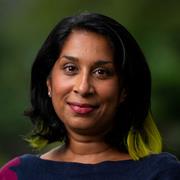
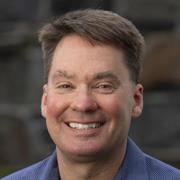
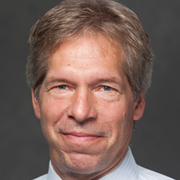
Charlie Mace

Professor
Chemistry
Bioanalytical and Materials Chemistry. To solve outstanding problems in global health, the Mace Lab applies a multidisciplinary approach combining aspects of analytical chemistry, materials science, and engineering. The primary goal of the Mace lab is to develop low cost, patient-centric technologies that can improve access to healthcare. To achieve this, the Mace Lab designs devices that improve the self-collection of blood and enable the diagnosis of diseases in resource-limited settings, and they are exploring ways the methods that are developed in the lab can used by others. Their main techniques leverage the properties of paper and other porous materials to integrate function into simple, affordable devices. Unique to laboratories in Chemistry departments, his group specializes in handling human blood and saliva. Technologies developed in the Mace lab have made the leap to clinical sites in Africa, South America, and the US, owing to their network of clinical, academic, and industry collaborators. The Mace Lab has broad expertise in assay development and device prototyping, which they apply to evaluating the efficacy of candidate therapeutics, performing separations that lead to new measurements, and making field-deployable kits for point-of-care testing. They have additional expertise in instrument development, phase separation in systems of polymers, and microfluidics.
faculty photo

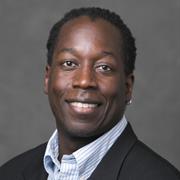
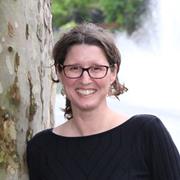
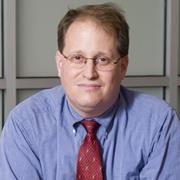
Zarin Machanda

Associate Professor
Anthropology
wild chimpanzee health and behavior, primate conservation, evolution of leadership
faculty photo

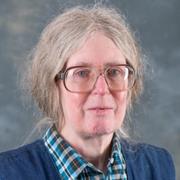
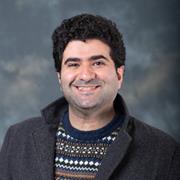
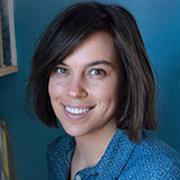
Keith Maddox

Professor and Department Chair of Psychology
Psychology
Social Cognition, Stereotyping, Prejudice, Discrimination
faculty photo

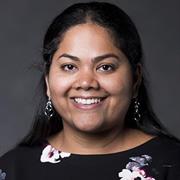
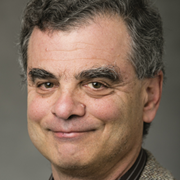
Chris Magnano

Assistant Teaching Professor
Computer Science
Computational Biology, Machine Learning, Network Analysis, Exploratory Analysis, Data Science Education
faculty photo

Anne Mahoney

Associate Teaching Professor
Classical Studies
Classical tradition and reception; linguistics; ancient drama; ancient mathematics; Latin, Greek, and Sanskrit language and literature
Person Placeholder

Magdalena Malinowska

Associate Teaching Professor
Romance Studies
Secondary language acquisition
faculty photo

Srivalleesha Mallidi

Associate Professor
Biomedical Engineering
Ultrasound imaging, photoacoustic imaging, multi-modality imaging, image-guided surgery and therapeutics, nano drug delivery systems
faculty photo

Andreas Mang

Associate Professor
Mathematics
numerical optimization; scientific computing; scientific machine learning; numerical analysis; inverse problems; parallel computing
faculty photo

W. Anthony Mann

Professor
Physics & Astronomy
Experimental high energy physics, elementary particle interactions, neutrino oscillations, neutrino-nucleus interactions, baryon instability searches. Design and execution of experimental measurements that reveal or constrain the existence of new elementary particles, that delineate the properties of known elementary particles, and that quantify the interactions and symmetries that govern fundamental energy systems of the subatomic realm.
faculty photo

Danilo Marchesini

Dean of Research for the School of Arts and Sciences and Leonard and Jane Holmes Bernstein Professor
The School of Arts and Sciences
Astronomy; galaxy formation and evolution; extra-galactic surveys; active galactic nuclei; near-infrared astronomy Understanding how galaxies form and evolve means understanding how the tiny differences in the distribution of matter inferred from the cosmic microwave background radiation grew and evolved into the galaxies we see today. The working hypothesis is that galaxies form under the influence of gravity, and galaxy formation can be seen as a two-step process. First, the gravity of dark matter causes the tiny seeds in the matter distribution to grow bigger with time. As they grow more massive, the gravitational attraction becomes stronger, making it easier for these structures to attract additional matter. As the dark matter structures grow, they pull in also the gas, made of hydrogen and helium, which is the primary ingredient for the formation of stars, and hence for the formation of the stellar content of galaxies. The formation of the stellar content inside these dark matter structures involves many physical processes that are much more complicated and quite poorly understood from a theoretical perspective. These physical processes include, for example, how gas cools and collapses to form stars, the process of star formation itself, merging of galaxies, feedback from star formation and from active super-massive black holes. My research activity in the past decade has focused on understanding how galaxies formed after the Big Bang, and how their properties (e.g., the stellar mass, the level of star formation activity, the morphology and structural parameters, the level of activity of the hosted super-massive black hole, etc.) have changed as a function of cosmic time. Since we cannot follow the same galaxy evolving in time, we need to connect the galaxies we observe at a certain redshift (i.e. a certain snapshot in time) to those we observe at a smaller redshift (i.e., at a later time in cosmic history) in order to infer how the properties of galaxies have actually changed and what physical mechanisms are responsible for these changes. The better we understand the galaxy properties at a certain time and the more finely in time we can probe the cosmic history, the easier it becomes to connect galaxies' populations seen at different snapshots in time, linking progenitors and descendants across cosmic time. Ultimately, my research aims at understanding what galaxy population seen at one epoch will evolve into at a later epoch, and what physical processes are responsible for the inferred changes in the galaxies' properties. In order to do this, I have adopted two different but complementary approaches. The first approach consists of statistical studies of the galaxy populations at different cosmic times; the second approach consists of detailed studies of individual galaxies to robustly derive their properties.
faculty photo

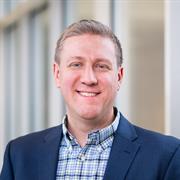
David Martin

Assistant Professor
Physics & Astronomy
- Extra-solar planets "exoplanets" - Planets in multiple-star systems, including circumbinary planets - Stellar populations and fundamental parameters - White dwarfs - Black holes - M-dwarfs - Stellar activity (spots and flares) - Celestial mechanics, including the Kozai-Lidov effect - Planet formation - Observational astrophysics
faculty photo

Karen Martin

Assistant Professor
Biomedical Engineering
Immunoengineering, Genetic Engineering, Adoptive Cell Therapy, Immuno-Oncology, Transplant Immunology
faculty photo

Diana Martinez

Associate Professor
History of Art and Architecture
American architecture history, global architecture history, post-colonial studies, materiality
Person Placeholder

Sarah Mass

Assistant Professor
History
Britain and the World, urban history, history of capitalism, histories of multiculturalism
faculty photo

William Masters

Professor
Food and Nutrition Economics, Policy, and Programs
Economics and policy analysis for agriculture, food and nutrition
faculty photo

Nimah Mazaheri

Professor and Dean of Academic Affairs
The School of Arts and Sciences
Comparative Politics, International Development, Public Policy, Energy, Environmental Studies, the Middle East
faculty photo

H. Muoki Mbunga

Assistant Professor
History
Modern East Africa
faculty photo

Elizabeth McCarthy

Part-time Senior Lecturer
Gordon Institute
Strategic facilitation; Influential storytelling; Business planning and consulting; Brand and marketing strategy; Consumer behavior; and Leadership development.
faculty photo

Andrew McClellan

Professor
History of Art and Architecture
History of museums, exhibitions, and collecting; history of art history; Early Modern European art and theory
faculty photo

Brandon McDonald

Rumsey Family Assistant Professor in Interdisciplinary Studies
Classical Studies
Environmental history of antiquity; Roman history and archaeology, especially the Eastern Mediterranean; health and disease in antiquity; Roman economy; climate history; ancient urbanism
faculty photo

Eoin McGuirk

J.C. Keogh and Family Professor
Economics
Political Economy, Development Economics, Applied Microeconomics
faculty photo

Melissa McInerney

Max and Herta Neubauer Endowed Professor in Economics
Economics
Public Economics, Health Economics, Labor Economics, and Applied Microeconomics
faculty photo

Kelly McLaughlin

Associate Professor
Biology
Molecular Development (Organogenesis: Development, Remodeling, Regeneration)
Person Placeholder

Loren Mcmahon

Lecturer
Occupational Therapy
faculty photo

Margaret McMillan

Neary Family Professor of International Relations
Economics
International Trade and Investment, Structural Change, Industrialization, Africa
faculty photo

Megan McMillan

Professor of the Practice
School of the Museum of Fine Arts at Tufts
faculty photo

George McNinch

Professor
Mathematics
The structure and representations of algebraic groups
faculty photo

Lionel McPherson

Professor
Philosophy
Ethics, Political and Social philosophy
faculty photo

Mitch McVey

Professor
Biology
DNA repair, DNA damage tolerance, molecular biology, Drosophila genetics, aging, mutagenesis
faculty photo

Christine McWayne

Professor
Eliot-Pearson Department of Child Study & Human Development
Early childhood education, school success of young children at risk due to poverty, parenting and family-school partnerships in diverse ethnocultural communities, culturally inclusive STEM curriculum, community-based research collaborations.
faculty photo

Saeed Mehraban

Assistant Professor
Computer Science
Quantum computational complexity, Continuous variable systems, Quantum Pseudorandomness
faculty photo

Alice Mello

Professor of the Practice and Director of Data Analytics
Data Analytics
Storytelling with Data through interactive dashboards & Experiential Learning. Project-based curriculum in DA & DS for Public High Schools. Women in STEM. .
faculty photo

Noah Mendelsohn

Professor of the Practice
Computer Science
distributed systems, operating systems, World Wide Web
faculty photo

Lily Mengesha

Associate Professor
Theatre, Dance, and Performance Studies
Critical Indigenous Studies, Performance Studies, Gender and Sexuality Studies
faculty photo

Derek Mess

Professor of the Practice
Chemical and Biological Engineering
thermal barrier coating (TBC), solid oxide fuel cell (SOFC) ceramics, carbon dioxide acceptors
faculty photo

Amy Millay

Teaching Professor
Romance Studies
Twentieth-Century Latin American literature; Oral tradition; Testimonial literature; Health in the Spanish-speaking world
faculty photo

Dave Miller

Assistant Teaching Professor
Mechanical Engineering
Human-technology collaboration, cooperation, and conflict; moral decision-making; mental models; engineering ethics
faculty photo

Eric Miller

Professor
Electrical and Computer Engineering
Statistical- and physics-based signal and image modeling and processing, tomographic image formation and object characterization, and inverse problems. Applications explored include human performance assessment, materials science, airport security, medical imaging, environmental monitoring and remediation, unexploded ordnance remediation, and automatic target detection and classification.
Person Placeholder

Laurie Miller

Adjunct Professor
Pediatrics